Showing posts with label Freud. Show all posts

Saturday, December 12, 2015

More philosophy links (several book reviews included)

(2nd of 3 link lists posted between Dec. 12 & 14)

Andy West in the Guardian: 'Philosophy saved me from poverty and drugs: that’s why I teach it to kids.'
Research by the Institute of Education has shown that a term of philosophy sessions improved the reading skills of children on free school meals when compared to a control group. If philosophy is made more available to working-class children, then stories like mine won’t seem so unusual. 
Todd Cronan reviews The Challenge of Surrealism: The Correspondence of Theodor W. Adorno and Elisabeth Lenk.
 
David Beer reviews Walter Benjamin's Archive.

Robert Pippin reviews On Kantian Metaphysics (by R. Lanier Anderson).

Namara Smith reviews Kamel Daoud's The Meursault Investigation, 'a retelling of The Stranger from the perspective of its nameless victim’s brother ... an indictment of his predecessor and an appropriation of his legacy'. Robin Yassin-Kassab's Guardian review of the same book.

Excerpt from Tim Whitmarsh's Battling the Gods (on Plato and ancient atheists).

On YouTube, Thomas Nagel's Dewey Lecture.

Video from Howard Becker's 2014 Erving Goffman Memorial Lecture, called ‘"Chicago, 1950, Another Look" ... about his and Goffman’s time at the Chicago Sociology' department.

At H-Net:
    Chris Blakley reviews David Knight's Voyaging in Strange Seas: The Great Revolution in Science.

    Alexander Kaye reviews Judaism, Liberalism, and Political Theology, a collection of papers about the views of 'Spinoza, Hermann Cohen, Leo Strauss, Hannah Arendt, Walter Benjamin, Martin Buber, Franz Rosenzweig, and Sigmund Freud', etc.

    Michah Gottlieb reviews Benjamin Pollock's Franz Rosenzweig's Conversions: World Denial and World Redemption.

'Cynthia Robinson, a founding member for Sly and the Family Stone who played trumpet, has died after a battle with cancer.'


More.

Monday, August 19, 2013

Why was Musil unfair to Karl Kraus?


You can see and hear Kraus reading from one of his texts at 8.21 in the above clip.

Among Karl Kraus' fans were many first-rate geniuses. Kafka, Wittgenstein, Canetti (who wrote about Kraus on pp. 65-74 on The Torch in My Ear), Benjamin (who also wrote about Kraus), Berg, and Webern all avidly followed Kraus' journal, Die Fackel. So, I'm intrigued when other geniuses are strongly critical of Kraus. In some cases, the antipathy is to be expected, as when Freud has this to say about one of his most acerbic critics:
I was very proud of the message you dedicated to me, but then again annoyed that you made an obeisance to Karl Kraus who stands at the very bottom of my ladder of esteem. (letter to Arnold Zweig, Dec. 2, 1927, The letters of Sigmund Freud and Arnold Zweig, ed. Ernst L. Freud)
More puzzling are Robert Musil's repeated digs at Kraus. I first learned of these barbs from a letter by Walter Kaufmann in the August 9, 1973 issue of the New York Review of Books. The letter was part of an exchange with Erich Heller. Kaufmann quoted this passage from Musil's diary:
Long before the dictators, our times brought forth spiritual veneration of dictators. Stefan George, for instance. Then Kraus and Freud, Adler and Jung as well. Add to these, Klages and Heidegger. What is probably common to these is a need for domination and leadership, for the essence of the savior. (Diaries: 1899-1941, selected & trans. Philip Payne, (Basic Books, 1998, p. 432)
As far as I can tell, this diary entry is from late August, 1937. Its assimilation of Kraus to Freud seems especially biting in view of Kraus' low opinion of psychoanalysis. In effect, Musil is saying that Kraus was no better than the figures whom he had especially despised.

Musil, Ea von Allesch, Martha Musil, & Franz Blei with unidentified clown
Photo Source.

Musil took Kraus to resemble Freud in having something like the role of a 'savior'. This point about Kraus appeared much earlier in Musil's diary. In an entry under the heading 'Krausians' (c. 1924), Musil wrote,
Bettauer treats Kraus, who once pilloried him "unjustly," with pained reverence. ... Kraus is the redeemer figure; Kraus, by simply being there and pouring out abuse, makes everything good again. (Diaries, pp. 303-4)
Consider this next entry from spring, 1939. Musil has just mentioned the view of National Socialism as a 'religious movement and a type of sect.' This leads him to consider psychoanalysis, another doctrine that putatively aspires to a comprehensive vision or world-view that makes sense of life. Of psychoanalysis' explanatory repertoire, Musil says,
These dozen concepts that its registered members use to explain the world. Any other scheme at all could probably achieve the same effect. ... That which has been explained is then left completely barren and there is not a single path, however narrow, that leads on further from there. (Total explanation as a bad sign.) In a minor key, the Kraus sect, the Klages sect, Jung, Adler. The "materialistic interpretation of history" also had the same function. (Diaries, p. 481)
'Total explanation as a bad sign' -- we are close to Popper's critique of psychoanalysis, Marxism, etc., according to which any such theory that seems capable of explaining everything, come what may, in fact explains nothing; since the theory can accommodate every possible outcome, it rules out no possible outcome and therefore lacks determinate, empirical content. The theory makes no interesting predictions, or 'there is not a single path ... that leads on ... from there.'

It seems unfair to include Kraus in the same category as Klages and the psychoanalysts (let alone the National Socialists), for while Kraus may have resembled leaders of quasi-religious sects in one respect, he lacked one of their defining features. Specifically, there may have been a cult of celebrity around Kraus -- he may even have been regarded by some as radiating a savior's charisma -- but he didn't preach a new and supposedly comprehensive view of life as an answer to all your questions and a cure to whatever ails you.

So, why the invective in Musil's remarks about Kraus? I don't know. It might have resulted from Kraus' feud with Alfred Kerr, who had been Musil's mentor (and who was Judith Kerr's father).
 

Wednesday, January 11, 2012

Some philosophy, lit, and art links

Here's an interesting new-ish journal, nonsite.org, the focus of which seems to be on issues straddling the boundary between philosophy and literary studies. Issue 3 of nonsite has some articles on Wittgenstein. Issue 4 includes Gary Hagberg's reply to 'Wittgenstein on the Face of a Work of Art', which was in Issue 3.

Robert Pasnau has a nice article on 'The Islamic Scholar Who Gave Us Modern Philosophy', Averroës.

From an interview with George Steiner: 'My multilinguism enabled me to teach, and to write After Babel: Aspects of Language and Translation, and to feel at home everywhere. Every language is an open window on the world. This is in contrast to the grim attachment to roots advocated by someone like Maurice Barrès. Trees have roots; I have legs.'

While poking around looking for on-line stuff by or about Kleist for the previous post, I found this long reflection on Freud's development of the notion of the uncanny by reference to E. T. A. Hoffmann's 'The Sandman'.

Daniel Johnson reviews a book about  'the Jewish Haute Bourgeoisie of Vienna 1800–1938'.

Miranda Seymour reviews a biography of Stefan Zweig.

I first heard of Karl Wilhelm Diefenbach when I was doing some research on Gusto Gräser. I didn't realize, though, that Diefenbach was even more of a wild-man-with-a-prophet's-beard than Gräser was. Strange Flowers has a post on Diefenbach with some neat pics. In the slide show at the bottom of that Diefenbach post, one of the photos shows Diefenbach and several other proto-hippies with flowers in their hair.

Here's the ultimate site for Samuel Johnson's dictionary. 'Pudding: ... A kind of food very variously compounded, but generally made of meal, milk, and eggs.'

Richard Marshall reviews Stephen Barber's Walls of Berlin.

Cool but creepy photos by Stephen Berkman.

Joan Didion interviewed at the NY Public Library by Sloane Crosley:
 

Tuesday, July 26, 2011

Austro-Hungarian subjects

Mia Slavenska

Otto von Habsburg's obituary: 'He died a happy man, right about almost everything, if usually too early.'

'“Only silence is innocent”: Zagajewski on Rilke, irony, and the future of poetry'

Brett Foster reviews Edward Snow's new translation of some Rilke poems (here's an excerpt from Zagajewski's introduction to Snow's translations)

Mark Harman's translation of Kafka's 'Message From the Emperor'

Isotropic Films is making a film of Kafka's Metamorphosis (the father's packin' heat -- I wonder if the bug will shoot electric rays from its antennae)

At Three Percent, Bill Marx goes to bat for Ernst Weiss's novel, Georg Letham, and Brady Evan Walker reviews Joseph Roth's Job, and Chad W. Post introduces Gregor von Rezzori's Ermine of Czernopol

Tom Nairn reviews a new biography of Ernest Gellner 

Otto Preminger one-ups Letterman:


Freud's cocaine thing. Here's a pdf about Freud's cocaine thing (and the much worse drug habits of renegade psychoanalyst Otto Gross, who had radical ideas about sex and free love, and who had an affair with Frieda von Richtofen, who later married D. H. Lawrence and might've presented to him [Lawrence] Gross' ideas about sex and free love ...).

A longish piece in Haaretz called 'Monk, Mystic, Mechanic' -- on a recent Berlin exhibit devoted to Wittgenstein

Alan Saunders' and Gavin Kitching's podcast on Wittgenstein's puzzlement

Wittgenstein's photos, and a 'Lost archive shows Wittgenstein in a new light'

Dave Maier on Wittgenstein and meaning: "Can I say 'bububu' and mean 'If it doesn't rain I shall go for a walk'?" 

Humpty Dumpty

Fergus Johnston reviews the new translation of Jens Malte Fischer's 2003 biography of Mahler, and here's Rupert Christiansen's review

And M. Werbowski reviews Norman Lebrecht's Why Mahler?

Bob Duggan reviews a Neue Galerie show on fin-de-siècle Vienna: 'How Vienna in 1900 gave birth to modernity' -- '“In his life, Klimt clearly divided women into those he respected, even exalted, and those he slept with,” [Jill] Lloyd acknowledges, but also “Klimt’s images of women are acknowledged as complex representations with a symbolic force; as such, they embody allusions to the ‘women question’ that are far from straightforward".'

Mattel's new 'Gustav Klimt Barbie doll echoes the artist's portrait, Adele Bloch-Bauer I, reflecting the painting's Byzantine mosaics and Egyptian motifs. She wears a halter gown with silvery trim, draped chiffon sleeves and bustle .... She is a magnificent muse.'

The world's first mobile internal combustion engine was made in Vienna

Mahler, with Glenn Gould conducting, Maureen Forrester singing: 

Saturday, July 9, 2011

Get your phil of love

By Gustav Doré
The Internet Encyclopedia of Philosophy's entry on the philosophy of love

Stanford Encyclopedia of Philosophy's entry on phil of love

 'Love, the Pope and C. S. Lewis' by Avery Cardinal Dulles

A brief note on Anders Nygren's book from the 1930's, Eros and Agape

Robert Merrihew Adams on 'pure love'

MIT's open course site for Irving Singer's course on the phil of love, and here's a playlist of Singer's lectures

Philosophy Bites' podcast on love in Plato's Symposium (Jowett's translation of the Symposium)

Two papers on love, one on love in Plato and the other relating love to Epicurus

ADDED (July 11) via Omnivore: 'Plato, Romance, and Self-Inquiry' by John Bardi

Syllabus for a neat-looking Notre Dame course on love 'built around Plato's Symposium, Shakespeare, Catholic writings, and several movies'. There are videos of the lectures, which I can't play -- but they're also on iTunes

Eric Ormsby on the 'Erotic Inferno' -- a review of A. N. Wilson's Dante in Love

Last January's issue of Essays in Philosophy was devoted to the phil of love (8 articles)

A summary of Kierkegaard's Works of Love


From 2001, Melvyn Bragg talks to Roger Scruton, Angie Hobbs, and Thomas Docherty about the phil of love

From 2007, Alan Saunders talks to Linnell Secomb about 'philosophical love stories', with references to Nietzsche, Frankenstein, and de Beauvoir

Nichi Hodgson reviews books on love by Simon May and Lisa Appignanesi 

Philosophy Bites interviews May on love

From Nicholas Lezard's review of Gillian Rose's Love's Work: '"Love" and "life" are for Rose almost interchangeable words; we read the phrase "life affair" more than once.'

Freud's love letters to his future wife

Alain de Botton surveys Schopenhauer on love:

Saturday, October 9, 2010

Mitteleuropa items

Hans Blumenberg. Telos issues a Call for Papers for a special issue on his work.

Here's an intriguing new book from Cambridge, Thinking the Unconscious, about the idea of the unconscious in 19th-Century German thought, with articles about Schelling, Nietzsche, Fechner, Goethe, etc.

We've heard of the great influence on North American science by Jewish immigrants from central Europe, but it's interesting also to see the impact of these immigrants on our pop culture (beyond Hollywood), from Barbie to PR to the shopping mall to ... surfing. Here's Peter Lunenfeld on Freud, Gidget and the Austro-Hungarian roots of the surfer ethos -- 'It's gnarly on the Ringstrasse, dude!'

Beyond the Ringstrasse -- Red Vienna architecture.

Here's a PEN panel-discussion in NY of Stefan Zweig from last April, which includes Michael Hofmann, Paul Holdengräber, and others. Here's some coverage of the event.

Thursday, June 3, 2010

Linked lives in early Austrian feminism

This post was substantially revised on June 11, 2010.
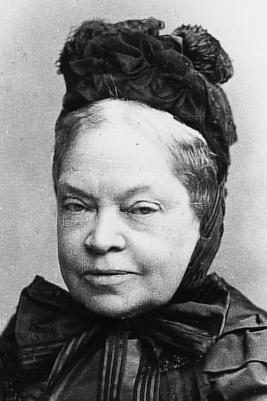
The photo is of Marie von Ebner-Eschenbach. Ebner-Eschenbach, a Roman Catholic aristocrat and author, was one of the first women to receive a doctorate from the University of Vienna. She was awarded an honorary doctorate by the faculty of philosophy in 1900. Also of note is the fact that Ebner-Eschenbach and her husband were among the first members of a Viennese organization that was formed in 1891 to combat anti-Semitism. After Ebner-Eschenbach's death, Lou Andreas-Salomé described her to Freud as "a prototype of motherliness ... the lovelier the older she grew: I was every time newly astonished at how simply and naturally she grew on -- into death itself as into a final breath of life."

I wonder if such talk of motherly love rubbed Freud the wrong way and connected with his tendency to betray men who showed him patrician benevolence. Here's an examination of such a case, in which the older victim of Freud's betrayal was Josef Breuer, a friend of Ebner-Eschenbach's (she was one of Breuer's patients and the two had an extensive correspondence). Before the betrayal, Breuer had helped Freud immeasurably (partly by giving him money). Famously, Breuer gave Freud the story of Anna O., one of Breuer's patients.

Anna O. was Bertha Pappenheim, an Austrian feminist in the first third of the 20th-Century. Whatever one thinks of Breuer's and Freud's methods, they were better than those of the sanatorium in which "electric eels were applied to [Pappenheim's] face, currents of electricity were shot through her body, and she was treated with arsenic." It was in connection with Breuer's treatment that Pappenheim wrote fairy tales, which have now been translated into English.

One can only imagine the courage that it must have taken to be a feminist in Austria-Hungary, a militaristic society that, with a little more organization, would have been truly fascistic. Yet this same culture produced another heroic Bertha, the author Bertha von Suttner, who, though she hailed from a line of field marshals and cavalry captains, combined her feminism with determined pacifism, for which she was awarded the 1905 Nobel Peace Prize. It was Bertha von Suttner's husband, Baron Arthur Gundaccar von Suttner, who co-founded the above-mentioned Viennese society against anti-Semitism.

Another important early Austrian feminist was Rosa Mayreder, an essayist and activist whose critique of sexism led her to engage with the ideas of Nietzsche (pdf), Salomé's old boyfriend and a sexist whose misogyny was outdone probably only by that of the Viennese philosopher Otto Weininger.

The depth of sexism in Austria is evident from its tardiness in admitting women to the hallowed halls of academe. The first woman to get a doctorate from the University of Vienna was Gabriele Possanner von Ehrenthal, who received a doctorate from the faculty of medicine in 1897 (though all her coursework was completed in Zurich since the University of Vienna's medical faculty didn't admit female students until 1900). In 1901, Elise Richter earned a doctorate in philosophy from the University of Vienna. She later (1905) became the first woman to pass her habilitation from that school. She later perished in Theresienstadt (1943). It wasn't until 1930 that a woman passed the habilitation in the University's medical faculty.

Despite the opposition, these early feminists' efforts bore fruit. This is attested especially by the success of Austrian women in math and the physical sciences between the world wars. There is, for example, Lise Meitner, Olga Taussky-Todd, Hilda Geiringer von Mises, Herta Taussig Freitag, Cecilia Krieger, Marietta Blau, and Hertha Wambacher. In psychology, there was Else Frenkel Brunswik, who studied in Vienna with Karl Bühler.

And, of course, psychoanalysis attracted many Austrian women of a scientific/medical inclination between the wars, such as Helene Deutsch, Edith Buxbaum, Margaret S. Mahler and Anna Freud.

Thursday, January 21, 2010

Hofmann damns even Zweig's suicide note

In the London Review of Books, Michael Hofmann pours torrents of abuse on Stefan Zweig.

Here are some of the more pointed zingers: "Stefan Zweig just tastes fake. He’s the Pepsi of Austrian writing."

"... this uniquely dreary and clothy sprog of the electric 1880s; this un-Austrian Austrian and un-Jewish Jew ...; not a pacifist much less an activist but a passivist; this professional adorer, schmoozer ... who logged his phone calls and logged his letters and logged his books, and, who knows, probably logged his logs; ... who left a suicide note which, like most of what he wrote, is so smooth and mannerly and somehow machined – actually more like an Oscar acceptance speech than a suicide note – that one feels the irritable rise of boredom halfway through it ...."

Quit beating around the bush, Mr. Hofmann, and tell us what you really think about Zweig.

I'm not in a position to evaluate Zweig's writing. I've read only one of his works, Fantastic Night, about which I have mixed views (it's repetitive but has some good writing in places). He may have been an inveterate schmoozer, but at least he was generous, trying to help a younger writer schmooze, too.

Here's Zweig with Joseph Roth in 1936.

Update (Jan. 22): Well, I've slept on it and decided three things about Hofmann's article. First, it's outrageously unfair. Second, I'm glad he wrote it, and that the LRB published it without softening Hofmann's vituperation. Third, I've got to read more Zweig ASAP.

I've followed Hofmann's work and have high regard for it, but I also have lots of respect for Anthea Bell, who, as John Self has noted (in the comments to one of his posts), has devoted much time to translating Zweig, so she must want his novels to be read. Hofmann notes that several giants of Zweig's culture didn't take Zweig's work seriously. However, while I'm loath to disagree with Thomas Mann, Musil and Karl Kraus, I'm not convinced by their low estimation of Zweig's abilities. After all, Musil apparently held Thomas Mann's work in low regard, and Kraus ridiculed Freud (who was admired by Schnitzler). Then again, these guys might have disliked Zweig's work because he was a hack-writer, not much better in their eyes than a writer of pulp fiction, but some pulp-fiction and supposedly hack writers have drawn more appreciation in recent times than they received in their own day. Also, Zweig was seen as a tireless self-promoter, which, esp. in his culture, was definitely a vice (not so much being a self-promoter, but being seen as one). So, perhaps these luminaries disliked Zweig and allowed their personal disdain to colour their opinion of his work.

What's an early 21st-century anglo reader to do? I guess I've just got to knuckle down and read me some Zweig!

Update (Feb. 3, 2010): The next issue of the LRB (Vol. 32, no. 3) is on-line and contains six letters objecting to Hofmann's review. Notice, though, that Hofmann's article is the "most-read" on-line item at the LRB's site. This is lit-crit tabloid journalism. Scandal and intrigue sell papers. Yes, I've changed my mind. While it's good for the LRB to run a bracing critique, they shouldn't have run Hofmann's review with its more scathing personal remarks.

Update (March 14, 2010): Nicholas Lezard has a word or two about Hofmann's attack in a review of Pushkin's latest Zweig publication

Update (March 26, 2010): Stuart Walton in the Guardian -- "[Hofmann] has called [Zweig's] output 'just putrid.' A tad harsh, perhaps, but he has a point."

Update (May 13, 2010): Will Stone replies to Hofmann's article.

Update (Oct. 9, 2010): Here's a PEN panel-discussion in NY of Stefan Zweig from April 30, which includes Michael Hofmann, Paul Holdengräber, and others. Here's some coverage of the event.

Sunday, January 17, 2010

The state, the arts, gossip & accomplished nephews

Ludwig Feuerbach

On Aussie radio, Alan Saunders interviews Moira Gatens on Spinoza, Feuerbach and George Eliot's Middlemarch

More radio from Oz -- Parts 1 and 2 of a program on dreams (interviews with a Jungian [Part 1] and a neuroscientist [Part 2])

'Wallace Stevens, Armchair Visionary' (ht Books, Inq.)

'Aufklärung für Kinder' -- Walter Benjamin wrote 30 German radio broadcasts for kids between 1929 and 1932

The new English translation of de Beauvoir's Second Sex

A long excerpt from Marilynn Robinson's 2006 article, 'Onward Christian Liberals'

The Glorious Revolution and the making of the modern state

Review of Jon Elster's book on disinterested action

Joseph Margolis on his 2009 book, The Arts and the Definition of the Human

Mary Midgley reviews The Master and His Emissary

'Dark secrets about Charlie Chaplin's mother'

'Fuss over English egghead' -- the strange twists of Colin Wilson's career, including his meeting with Marilyn Monroe ("I had been told she was bookish")

Vintage crime fiction -- Raymond Chandler and Jim Thompson

A Scotsman summit on Montaigne

Jan Morris -- "I've been egocentric. Egocentric all my life."

I discovered Edward Bernays (a nephew of Freud) while teaching a course in media ethics a few years ago -- here's a piece on his relation to consumer culture. More about Bernays from Mind Hacks

One of Willard van Orman Quine's nephews, Robert Quine, was a great guitarist who gave up tax law for punk rock -- he worked with Lou Reed and Brian Eno among others

June Christy performs 'How High the Moon' with Nat King Cole and Mel Tormé:

Wednesday, August 27, 2008

Cafe Imperial

I wasn't much interested in Cafe Imperial. It seemed to be just an extension of a ritzy hotel, so I didn't even venture inside. Too bad, since it turns out to have a very interesting history.

First, Elias Canetti gives a mean-spirited anecdote about his meeting there with Stefan Zweig. I don't believe this anecdote to be accurate -- Canetti's autobiography is not that reliable, especially when he's talking about someone he didn't like. He evidently didn't like Zweig. Here's the relevant quotation:

"Soon after my return I ran into [Stefan] Zweig at the Cafe Imperial. He was sitting alone in one of the back rooms, holding his hand over his mouth to hide the absence of teeth [due to dental work]. Though he did not like to be seen in that condition, he beckoned me over to his table and bade me be seated. 'I've heard the whole story from Broch,' he said. 'You've met Joyce. ... Get Joyce to write a preface. Then your book will get attention.'" (Elias Canetti, The Play of the Eyes, p. 186)

Cafe Imperial also appears in Robert Musil's Diaries, but (again) Musil doesn't have much of interest to say about a cafe: "Yesterday, or the day before yesterday, spent some time with Morgenstern in the Cafe Imperial." (Robert Musil, Diaries, entry for March 26, 1930, p. 366)

More interestingly, Ludwig Wittgenstein met at this cafe with Ludwig von Ficker during the latter's visit to Vienna (so that Wittgenstein could give away part of his family's fortune to worthy artists under Ficker's guidance). Here's Ficker's description of a meeting with Wittgenstein on July 24, 1914:

"We met in Cafe Imperial, where there ensued a somewhat strenuous, but positively stimulating conversation between [Ludwig Wittgenstein] and the hard-of-hearing builder [Adolf Loos] on the still contoversial Haus am Michaelerplatz on questions of modern architecture, which seemed to interest Wittgenstein." (Ludwig von Ficker describing a meeting on July 24, 1914 at Cafe Imperial; quoted from Wittgenstein in Vienna, Allan S. Janik & Hans Veigl [Springer, 1998], p. 123)

The cafe in the Hotel Imperial was initially called Cafe Frohner. It's mentioned by Fritz Wittels, a med student and budding psychoanalyst in Freud's circle. According to Edward Timms, Wittels was also part of Karl Kraus' circle in 1907-08. Timms summarizes Wittels' description as follows:

"Later they [Kraus and Wittels] would go on to the Cafe Frohner, situated in the luxurious Hotel Imperial. Kraus was a heavy smoker, but never took a drop of alcohol. He was a gifted conversationalist and on good days, Wittels recalls, he enchanted everyone. All kinds of people -- senior government officials as well as artists, actors, and attractive girls -- would come to his table; and Kraus made them feel they were the 'centre of the universe'. Later, feeling the need to escape from the stifling atmosphere of bourgeois coffee houses, Kraus and his circle would move on to lower-class cafes patronised by prostitutes and bookies." (Edward Timms, 'The 'Child-Woman': Kraus, Freud, Wittles, and Irma Karczewska', in Vienna 1900: from Altenberg to Wittgenstein, ed. E. Timms and R. Robertson [Edinburgh University Press, 1990], p. 88)

Cafe Imperial was favoured by musicians; Mahler was a regular, as were Schonberg, Berg and Webern. According to Janik and Veigl, the Imperial was also visited by Freud, Hofmannsthal, Werfel, Rilke, Bruckner, Wagner, Brahms and Trotsky -- which raises a question: Is there a Viennese cafe from Trotsky's time in the Habsburg capital in which he did not luxuriate, excogitate or vegetate?

Update: I just read that Stalin was in Vienna briefly in early 1913 with Lenin, Bukharin and Trotsky. I can't find evidence that Stalin frequented any cafes. In his excellent Stalin biography, Simon Sebag Montefiore reports that Stalin, like Hitler, liked to take walks in the park around the Schonbrunn Palace.

Montefiore quotes Trotsky's description of his first encounter with Stalin: "I was sitting at the table beside the samovar in the apartment of Skobelev ... in the ancient capital of the Habsburgs [...] when suddenly the door opened with a knock and an unkown man entered. He was short ... thin ... his greyish-brown skin covered in pockmarks ... I saw nothing in his eyes that resembled friendliness [...] Then, as silently as he had come, he left, leaving a very depressing but unusual impression on me." (Simon Sebag Montefiore, Young Stalin [Weidenfield & Nicolson, 2007], p. 275)

Saturday, July 5, 2008

Gotthelf's Black Spider

Image from here.
Jeremias Gotthelf's most touted story is his 1842 novella
Die Schwarze Spinne (The Black Spider), which Thomas Mann professed to "admire almost more than anything else in world literature" (The Story of a Novel, trans. Richard and Clara Winston [NY: Knopf, 1961], p. 63).

This novella was not published in English until 1957, and was not among the most esteemed of Gotthelf's works until WWII, at which time it appears to have been co-opted by the Nazis. The story continued to grow in popularity in Germany after the war. It is not hard to see why; one of the story's motifs concerns the collective guilt of a community that has acquiesced in the evil plotting of one (or more) of its members.

I'll preface my review with a recommendation of these four posts on The Black Spider at Journey Round My Skull and of this review at Wuthering Expectations. I earlier provided some background information on Gotthelf.

The story begins in a Swiss village with preparations for a baptism. The villagers are affluent, indulging in a rich feast before departing for the church. They are keen to observe the social niceties and present themselves in accordance with the mores and customs of their community. After the baptism, they return to the parents' house for more socializing.

While lounging about, an old man tells a story about a window post in the house that looks out of place. It turns out that this post was taken from previous houses on this family's property. They preserve the post because it has for centuries imprisoned a monstrous spider. It is the family's duty to prevent the evil that lurks in this piece of their home from escaping.

The old man tells two tales, both of which are set centuries in the past.

The first story is set in the medieval era, when the Teutonic Knights ruled the area in which the village is located. The head knight commands the villagers to perform arduous tasks that leave them little time for their own farm work. The most burdensome of these tasks is to remove several large trees from a distant valley and erect them by the knight's castle.

The villagers realize that they cannot both complete this work and harvest enough food to get them through the winter. As they are complaining to each other, a green huntsman appears and offers to do most of the work required for re-locating the trees. His fee? Well, it turns out that he's Satan, and he wants the villagers to give him an unbaptized child. At first they refuse, but eventually one of the villagers, Christine, accepts the devil's terms. The other villagers are uneasy about this, but end up going along with the arrangement (by co-operating with the devil to move the trees). So the whole village is implicated in Christine's fiendish pact. They reckon, however, that they can refuse the devil his due by baptizing each newborn at birth.

Satan, of course, has prepared for this eventuality. When he made the agreement with Christine, he kissed her cheek, which made her feel "as if some sharp-pointed steel fire were piercing marrow and bone, body and soul." She sees his face "gleefully distorted," and then he disappears. (I'm quoting from p. 162 of German Novellas of Realism, Vol. 1, ed. Jeffrey L. Sammons, trans. H. M. Waidson [Continuum, 1989].) Commentators have long noted the sexual overtones of this passage, especially in view of the fact that the devil's kiss implanted the beginnings of a creature in Christine's face. When it becomes apparent that she plans not to keep her part of the deal, the creature grows in her face, taking the shape of a spider-like blemish. As it grows larger, it becomes clear that it really is a spider. Its growth causes Christine great pain, leading her to try and secure an unbaptized child for the devil.

At one point, the spider gives birth to a legion of smaller spiders which burst from Christine's face to torment and kill the villagers' cattle. A commentator, David Gallagher ("The Transmission of Ovid's Arachne Metamorphosis in Jeremias Gotthelf's
Die Schwarze Spinne," Neophilologus, on-line preprint), says that on one longstanding interpretation the spiders represent the plague -- Christine is infected and the army of little spiders that spread from her are like germs that carry the disease.

After Christine's subsequent, failed attempt (abetted by other villagers) to steal a child, she undergoes a full metamorphosis into a large spider, or the spider in her face consumes her -- it isn't clear. This large spider kills many villagers. It does at least have the decency to kill also the local Teutonic Knights. Eventually, though, one heroic and pious woman, wishing to protect her kids from the spider, imprisons it in the window post. She does, however, suffer a spider bite, which kills her. The lesson is clear: a good mother is willing to lay down her very life for the sake of her children.

The second of the old man's stories is less involved. Briefly, a couple of centuries later a rash fool lets the spider out; it launches another reign of terror, which is ended only when another pious individual (this time a man) sacrifices his life in order to protect some children by putting the spider back in the window post.

The upshot of the old man's stories is that the villagers must always be pious and vigilant against the evil that lies within lest it erupt and destroy them all. Also, they must appreciate the significance of baptism, standing ready to sacrifice themselves for the well-being of their children.

I didn't really appreciate the point of Gotthelf's story until I read an article about it by Jamie Rankin ("Spider in a Frame"
The German Quarterly 61 [1988]: 403-18). Rankin describes a narrative structure that typifies many of Gotthelf's stories: first, there is a framing narrative, in which a narrator (who is not a character in the story) describes some events that are roughly contemporary with their narration; the second part of the structure is an internal narrative, which appears when a character in the framing narrative recounts some events from the past. According to Rankin, Gotthelf used this structure for a didactic purpose. Briefly, the characters in the framing narrative exhibit some vice, the characters in the internal narrative more clearly exhibit the same vice, and the internal narrative is designed to impress upon the characters in the framing story the need to mend their ways.

Rankin then applies this template to The Black Spider, which requires finding some vice in the characters of the framing story. This runs counter to the interpretive tradition, though, since the frame narrative in The Black Spider seems to be full of merriment in a nice, solid community. So, what's wrong with the people in the framing story? Well, says Rankin, Gotthelf, a devout pastor, would surely not have approved of the villagers' attitude to the baptism. They see this religious ceremony mainly as a festive event, an occasion to socialize and display their material wealth (in the form of a great feast). Little thought is given to the religious purpose of the ceremony, the focus of which should be the well-being of the child.

For Rankin, the villagers' failure to attend to this point is an instance of the larger flaw of self-centredness. The focal concern for each person at the baptism seems to be her own reputation and the social game-playing that is designed to enhance it. As a result, the villagers come across as being too self-centred to care genuinely for the well-being of their peers (except insofar as their well-being is necessary for one's own). In short, each villager seems to regard his peers as mirrors, where what he really cares about is how he is reflected in their opinions. Such obsessive self-concern stands in marked opposition to the selfless care for others that Gotthelf prefers, and that is supposed to be at the forefront in baptism, a sacred rite performed for the sake of a new member of the community (and not an occasion to party or improve one's own social standing).

The villagers' self-centredness is reflected in an exaggerated, grotesque way in the internal narratives, especially the first one. There, the villagers end up trying to prevent a child's baptism, being prepared to sacrifice this potential new member of their community for the sake of their own material well-being. By contrast, the heroes in both internal stories display a thoroughly selfless devotion to the well-being of others (children in both cases).

Rankin doesn't mention Kant, but Kantian ethics fit nicely into Gotthelf's lesson, especially the Kantian idea that one ought never to treat others wholly as means but always as ends in themselves. The villagers in the framing story treat each other as mere means to self-praise, or to the ehancement of their reputations, showing little real concern for another person as an end in himself or herself (a locus of intrinsic value that may call for the sacrifice of something of one's own).

Finally, there is, sadly, blatant sexism in Gotthelf's work. For instance, in the second internal story there is this description of a male character: "... his will lay bound by that of his womenfolk, and such dependence is certainly a heavy sin for any man. ..." (p. 206). Again, we find this description of the fool who set the spider free: "... in the company at large he was like a ravening wolf and behaved as if he hated everyone, as if he wanted to outdo them all in wild deeds and words; but men like that are supposed to be just the most attractive to women." (p. 202) Also, Christine, an evil woman, is an assertive woman, and these traits seem to be linked in Gotthelf's view. (Worse still, she's from out of town!)

One critic, William Collins Donahue, has a paper in which he claims to excavate, by Freudian means, a deeper, pervading misogyny in Gotthelf's novella ("The Kiss of the Spider Woman," German Quarterly 67 [1994]: 304-24). I'm not convinced. I think the sexism is all on the surface, and once we dig deeper we find less sexism. For example, in Gotthelf's novella evil takes both male and female forms, there are powerful, scary male and femal characteres, both male and female characters exhibit the chief vice of the story, male and female characters make sacrifices for the sake of the children, male and female characters learn from the internal stories, etc.

Update (August 7, 2008): I've just found another interesting reference to The Black Spider, this time by Elias Canetti. On p. 216 of the Granta version of Canetti's A Torch In My Ear (part of his autobiography), he says that when his future wife, Veza, spoke highly of Peter Altenberg's work, he (Canetti) "found this ridiculous" and "opposed Altenberg with my Swiss writers: Gotthelf's The Black Spider and Keller's 'The Three Just Kammachers'."

Update (May 6, 2009): Oneworld Classics have re-issued Waidson's translation.

Update (July 30, 2009): Bill Marx has a short review at World Books.

Sunday, March 16, 2008

Reflections on Der Schimmelreiter by Theodor Storm

I just read Denis Jackson's nice translation of Theodor Storm's Der Schimmelreiter (first published in 1888). For more about Storm, I recommend Jackson's great site about the author.

Storm’s novella contrasts two ways of responding to nature: there are the fanciful legends and superstitions of the community, and there is the more modern scientific and technological deployment of reason exemplified by the protagonist, Hauke Haien.

The story of Hauke’s life is told to a traveler by an old teacher, a ‘rationalist’ who doubts the supernatural elements of the tale. The teacher depicts Hauke as a great innovator whose engineering prowess gave him superior powers over nature, enabling him to design a better dyke to protect the community. The people repay Hauke with dark suspicion and rumors of his diabolical affiliation.

In the teacher's retelling of the story, the supposedly supernatural elements appear only ambiguously. So, e.g., there is a seemingly spectral horse, which is sold to Hauke by someone who laughs like ‘the devil’ (p. 72). But nothing much comes of this – the horse functions in the rest of the story like a natural though somewhat wild horse, one that only Hauke can tame (just as Hauke alone can tame the wild sea with better dykes). Then there's Trin Jans, who is presented not as a real witch but rather as ... well, as the sort of character who's a witch in more fanciful legends. There's also the suggestion that Hauke is cursed because he killed her cat (the cat came back, as it were). Thus, while the old teacher is aware of the supernatural aspects of the tale, he reigns them in to make them fit into a naturalistic interpretation.

The resulting narrative is in places quite eerie. Examples include the narrator's partly anthropomorphic characterization of some birds on the tidal flats (pgs. 22 & 99) and Trin Jans' uncanny story about a mermaid, which actually makes the mermaid seem terrifying, like something more and less than human (p. 98). In both cases the author embeds fragmentary human traits in what are ultimately strange, alien creatures that, like nature itself, efface humanity with a chilly indifference.

More generally, the tale charts a mundane landscape suffused with potentially supernatural elements that appear fleetingly in ambiguous forms, never quite surfacing as truly supernatural phenomena but, instead, appearing to be at home in the confines of nature. There is thus an ongoing juxtaposition of the world as (on the one hand) a natural order that fits the technical-scientific templates of reason and (on the other hand) a chaotic abyss from which wild, non-rational forces periodically erupt with cataclysmic effect.

These unpredictable natural forces find their echo within the human psyche. Hauke Haien, a paragon of reason, isn't alert to these destructive elements in his own soul, and so he's unaware of how they have eroded his own foundations over the years. Eventually, they catch him totally unawares, welling up from within and casting him into the abyss. Such a psychological reading is pursued in a meticulously Freudian direction by Anette Schwarz in her paper, “Social Subjects and Tragic Legacies: The Uncanny in Theodor Storm's Der Schimmelreiter” (The Germanic Review 73.3 [Summer 1998]: 251). Schwarz points out that neither Hauke nor his wife (Elke) has a mother who figures in the narrative (even though their fathers both loom large), and that Trin Jans stands in symbolically as the mother figure.

The most Freudian thing about Storm's novella, in my opinion, is its uncanniness. In describing the uncanny, Freud said that it characterizes fictional works that seem "to move in the world of common reality" but into which some strange, improbable or impossible events intrude. Freud focused on E. T. A. Hoffmann, but Storm's work seems a better epitome of Freud's theory.

Thomas Mann characterized Storm's achievement as "an art kind to the mystical and uncanny, the pagan northern art of [Der Schimmelreiter]. ... [I]t is precisely here ... that something of primeval power is finally achieved, some combination of human tragedy with the wild mystery of nature, something dark and heavy with the greatness and unknownness of the sea...." (Thomas Mann, 'Theodor Storm', 1930)

Update (Dec. 15, 2008): New York Review Books will re-issue James Wright's 1964 translation of this novella in early 2009. In their announcement of this upcoming publication, they quote from Kirkus Reviews the claim, "There is nothing better in German fiction prior to the work of Thomas Mann."

Sunday, December 2, 2007

Falling in love with an automaton

I revisited E. T. A. Hoffmann's The Sandman, which Freud discussed in his paper on the uncanny. Written in the early 1800's, Hoffmann's tale anticipates more recent fiction involving automata. E.g., in The Sandman, a character falls in love with Olympia, whom he then discovers to be a robot. Freud notes that this strand of the narrative isn't the source of the story's uncanniness, and that, if anything, Hoffmann puts the automaton to a humorous, satirical use. E.g., once Olympia is exposed, Dr. Spalanzani, one of her designers, has to flee to "escape a criminal charge of having fraudulently imposed an automaton upon human society," a crime that sows "an absurd mistrust of human figures." Indeed, to be sure they're not dating robots, men start requiring their girlfriends to demonstrate their human imperfection by singing and dancing out of time, which is a very different male response from the one in Ira Levin's The Stepford Wives (where the realization that one is dealing with an automaton is uncanny). A similar motif animates one of the best episodes in the 1960's TV series The Outer Limits. This 1964 episode, 'Demon With a Glass Hand' (written by Harlan Ellison & starring Robert Culp), presents a woman's response to the discovery that she's fallen for an automaton -- she screams and runs away.

Update (Sept. 26, 2009): According to this Wiki article on the 'Uncanny Valley', real automata inspire only revulsion.

Update (Sept. 27, 2009): Unsurprisingly, there's also an old Twilight Zone episode featuring a relationship between a human person and a automaton. It's called 'The Lonely'.

Update (Oct. 4, 2009): And of course there's a Star Trek episode (from the original series) to be cited. It's called 'What are little girls made of?' It featured several 'androids', the best one of which was the obvious robot, Ruk (who was played by the same guy who played Lurch in the Addams Family).