Otto Neurath
Galen Strawson gives Nicholas Humphrey's new book a negative review, and Humphrey retaliates with some nasty remarks in the comments section
Colin McGinn takes a relatively mild tone (compared to some of his other reviews) in this reflection on V. S. Ramachandran's latest book.
Scott Atran comes down hard on Sam Harris's book, and Gary Wills is not impressed by that book about 'whooshing' by Dreyfus and Kelly. Here's a brief reply by Kelly.
A BBC podcast in which Melvyn Bragg talks to Simon Blackburn, Helen Beebee, and Galen Strawson on free will, and here's Bragg talking to Grayling, Millican, and Keefe about logic
From Philosophy TV, here are Michael Boylan and Charles Johnson discussing 'philosophy and literature'. Here's an article by Boylan on the use of fiction for the exploration of philosophical questions.
From North Dakota, there's an impressive archive of interviews for the radio show, 'Why?'. For example, there are hour-long interviews with Arthur Danto, Charles Taylor, Rebecca Goldstein, Martha Nussbaum, etc.
Two podcasts on the Philosopher's Zone: one on the philosophy of music (with A. J. Hamilton), the other on Kurt Gödel (with Mark Colyvan)
And two from philosophy bites: one on Montaigne (with Sarah Bakewell) and one on F. P. Ramsey (with Hugh Mellor -- there's a link there to Mellor's BBC documentary on Ramsey from the late 1970's in which Mellor interviews A. J. Ayer, I. A. Richards, R. B. Braithwaite, etc.). Here's Anthony Appiah's discussion of Bakewell's book on Montaigne. And there's now another book on Montaigne, this time by Saul Frampton.
Here are several audio files from a Philosophy of Literature meeting at Royal Holloway University (ht OLP)
Here's the text of an interview with Julia Kristeva
A video of Baroness Mary Warnock in a panel discussion of roles for philosophy in politics. Warnock recently made the Guardian's list of the top 100 women in writing and academia, as did another philosopher, Onora O'Neill.
A Guardian piece on Roland Barthes' Camera Lucida, which influenced Sebald
Here's the 2nd hour of CBC's 'Sunday Edition', in which Michael Enright interviews Jason Brennan, a philosophy prof at Brown University, about not voting
At 24:30 of that CBC podcast, Enright begins his interview with 'Debo' Mitford. It isn't about philosophy but I highly recommend it. I LOL'd at 36:10 and 37:25. Here's a description of the whole program.
Showing posts with label Warnock. Show all posts
Saturday, March 26, 2011
Tuesday, January 4, 2011
Five recent references to philosophy (mostly from the New Statesman)
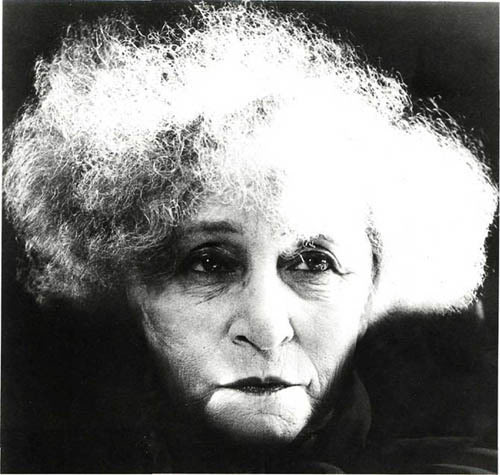
Colette photographed by Madame d'Ora
James Ryerson's long article on Wittgenstein's influence on David Foster Wallace
James Ryerson's note on the late Philippa Foot
Snippets from Baroness Mary Warnock's interview in the New Statesman: 'You can't pretend that Bach wrote his religious cantatas out of anything other than profound Protestant belief'; 'Morality comes from our common human nature'; 'Rights are too legalistic a concept to be the foundation of morality.' In response to the question whether we're all doomed: 'Probably - but it will be after my time.'
From the New Statesman's article on Ricky Gervais: 'Science, Gervais says, was his first love, then philosophy, which he studied as an undergraduate. The rigours of both disciplines, he says, inform his material: logical investigation and rational inquiry.'
The New Statesman`s interview with Daniel Kehlmann: `Yes, I come from philosophy. I could never have become an original philosopher, but I was always interested in philosophy and I studied it. And I'm still very much concerned with ideas and how they interplay with human beings. There is a certain sort of comedy that arises out of the clash between lofty ideas and the banal realities of life.`
James Ryerson's long article on Wittgenstein's influence on David Foster Wallace
James Ryerson's note on the late Philippa Foot
Snippets from Baroness Mary Warnock's interview in the New Statesman: 'You can't pretend that Bach wrote his religious cantatas out of anything other than profound Protestant belief'; 'Morality comes from our common human nature'; 'Rights are too legalistic a concept to be the foundation of morality.' In response to the question whether we're all doomed: 'Probably - but it will be after my time.'
From the New Statesman's article on Ricky Gervais: 'Science, Gervais says, was his first love, then philosophy, which he studied as an undergraduate. The rigours of both disciplines, he says, inform his material: logical investigation and rational inquiry.'
The New Statesman`s interview with Daniel Kehlmann: `Yes, I come from philosophy. I could never have become an original philosopher, but I was always interested in philosophy and I studied it. And I'm still very much concerned with ideas and how they interplay with human beings. There is a certain sort of comedy that arises out of the clash between lofty ideas and the banal realities of life.`
Subscribe to:
Posts (Atom)