Showing posts with label LouAndreasSalome. Show all posts

Monday, July 18, 2011

Café Stefanie (Munich)

I did not make my entry into the Bohème until I had pushed back the thick baize curtain behind the glass door of the Café Stefanie, seated myself at one of the little marble-topped tables and ordered an absinthe. (Richard Seewald, 'In the Café Stefanie')
Café Stefanie (1905)

Researching Munich's café life in the early 20th century has proved to be an excellent 'way in' to the cultural and artistic milieu of a great and very influential creative centre. I don't know if it was on a par with café life in Vienna, but the gathering of creative and intellectual talents in the cafés of Schwabing at least comes close.

One of the liveliest cafés in Schwabing was the Café Stefanie. Destroyed in WWII, it was located at what is now Amalienstrasse 25 (at the intersection with Theresienstrasse). You can see its location at roughly the 9-minute mark of this YouTube guide to Schwabing.

The Stefanie was one of the three central European cafes that were nicknamed Café Grössenwahn (Café Megalomania) -- the other two were the Café des Westens in Berlin and the Griensteidl in Vienna. The characterization of these three establishments' regular customers as megalomaniacal might have been an act of mockery by others, but it was also a bit of self-irony on the part of the customers themselves, who included many writers, activists, and artists.
It had two rooms, a large one with two billiard tables ... and a smaller one at whose windows the chess players sat. ...  In the smaller room the chess-players sit crouching silently over their boards: Gustav Meyrink, who popularized magic and horror, is playing with Roda Roda [aka Sandór Rosenfeld], who substitutes for the officer's uniform he used to wear the obligatory red waistcoat and the monocle in his rubicund bulldog face. (Richard Seewald, 'In the Café Stefanie')

Chess at the Stefanie

While the more established artists and intellectuals (inc. members of the Blue Rider) tended to congregate at the Café Luitpold, the Stefanie drew a younger, more left-wing crowd. Among its habitués were the dramatist Frank Wedekind, the artist Alfred Kubin, the novelist Heinrich Mann, and the fiction writer Gustav Meyrink, who used the Stefanie as the setting for a short story called 'Wie Dr. Hiob Paupersum seiner Tochter rote Rosen schenkte', which appeared in an issue of Simplicissimus in 1915 (here's a pdf of that issue).

There were also several anarchists and communists, such as Erich Mühsam, Kurt Eisner, and Otto Gross. Younger customers included Oskar Maria GrafErwin Piscator, Franz Jung, and Emmy Hennings -- these last three would become influential in the Dada groups in Berlin and Zurich. Else Lasker-Schuler visited the Stefanie on her trips to Munich. And of course there was Franziska Countess zu Reventlow, a novelist, translator, and occasional prostitute who was a sort of cross between Lou Andreas-Salomé and Anita Berber. (Update [July 28]: Here's more about the Countess.)
And the psychoanalysts: the unhappy Dr. Gross, son of the famous criminal psychologist, his waistcoat sprinkled with cocaine, who was put away by his father; Dr. Gösch, ... lecturing to an attentive following on his idea of circular marriage, Leonhard Frank whose Cause made him famous because he introduced psychoanalysis into literature. (Richard Seewald, 'In the Café Stefanie')


The Stefanie became a sort of home base for the revolutionaries who instituted the Bavarian Soviet Republic just after WWI. In that capacity it attracted the leading German anarchist Gustav Landauer (grandfather of Mike Nichols) and the logical positivist Otto Neurath (as an economic adviser). Lewis Feuer describes the centrality of the Stefanie to the communist uprising at the end of WWI (and notes that a young Werner Heisenberg was in the Freikorps that suppressed it).

Thursday, June 3, 2010

Linked lives in early Austrian feminism

This post was substantially revised on June 11, 2010.
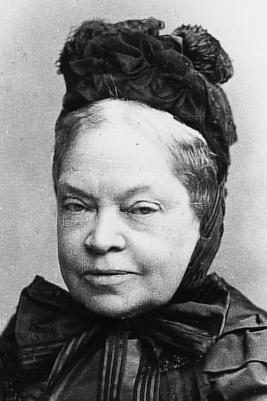
The photo is of Marie von Ebner-Eschenbach. Ebner-Eschenbach, a Roman Catholic aristocrat and author, was one of the first women to receive a doctorate from the University of Vienna. She was awarded an honorary doctorate by the faculty of philosophy in 1900. Also of note is the fact that Ebner-Eschenbach and her husband were among the first members of a Viennese organization that was formed in 1891 to combat anti-Semitism. After Ebner-Eschenbach's death, Lou Andreas-Salomé described her to Freud as "a prototype of motherliness ... the lovelier the older she grew: I was every time newly astonished at how simply and naturally she grew on -- into death itself as into a final breath of life."

I wonder if such talk of motherly love rubbed Freud the wrong way and connected with his tendency to betray men who showed him patrician benevolence. Here's an examination of such a case, in which the older victim of Freud's betrayal was Josef Breuer, a friend of Ebner-Eschenbach's (she was one of Breuer's patients and the two had an extensive correspondence). Before the betrayal, Breuer had helped Freud immeasurably (partly by giving him money). Famously, Breuer gave Freud the story of Anna O., one of Breuer's patients.

Anna O. was Bertha Pappenheim, an Austrian feminist in the first third of the 20th-Century. Whatever one thinks of Breuer's and Freud's methods, they were better than those of the sanatorium in which "electric eels were applied to [Pappenheim's] face, currents of electricity were shot through her body, and she was treated with arsenic." It was in connection with Breuer's treatment that Pappenheim wrote fairy tales, which have now been translated into English.

One can only imagine the courage that it must have taken to be a feminist in Austria-Hungary, a militaristic society that, with a little more organization, would have been truly fascistic. Yet this same culture produced another heroic Bertha, the author Bertha von Suttner, who, though she hailed from a line of field marshals and cavalry captains, combined her feminism with determined pacifism, for which she was awarded the 1905 Nobel Peace Prize. It was Bertha von Suttner's husband, Baron Arthur Gundaccar von Suttner, who co-founded the above-mentioned Viennese society against anti-Semitism.

Another important early Austrian feminist was Rosa Mayreder, an essayist and activist whose critique of sexism led her to engage with the ideas of Nietzsche (pdf), Salomé's old boyfriend and a sexist whose misogyny was outdone probably only by that of the Viennese philosopher Otto Weininger.

The depth of sexism in Austria is evident from its tardiness in admitting women to the hallowed halls of academe. The first woman to get a doctorate from the University of Vienna was Gabriele Possanner von Ehrenthal, who received a doctorate from the faculty of medicine in 1897 (though all her coursework was completed in Zurich since the University of Vienna's medical faculty didn't admit female students until 1900). In 1901, Elise Richter earned a doctorate in philosophy from the University of Vienna. She later (1905) became the first woman to pass her habilitation from that school. She later perished in Theresienstadt (1943). It wasn't until 1930 that a woman passed the habilitation in the University's medical faculty.

Despite the opposition, these early feminists' efforts bore fruit. This is attested especially by the success of Austrian women in math and the physical sciences between the world wars. There is, for example, Lise Meitner, Olga Taussky-Todd, Hilda Geiringer von Mises, Herta Taussig Freitag, Cecilia Krieger, Marietta Blau, and Hertha Wambacher. In psychology, there was Else Frenkel Brunswik, who studied in Vienna with Karl Bühler.

And, of course, psychoanalysis attracted many Austrian women of a scientific/medical inclination between the wars, such as Helene Deutsch, Edith Buxbaum, Margaret S. Mahler and Anna Freud.