Showing posts with label Weininger. Show all posts

Saturday, February 2, 2013

The latest on Kakania

Mr. Waggish has a new post about Robert Musil, in which a new book on Musil by Genese Grill is discussed.

The Monist's submissions deadline for its Musil issue has just passed. Achille Varzi, a philosophy professor at Columbia University (who was a tutor in my first logic class), has contributed a paper on the Confusions of Young Törleß, a draft of which is available as a pdf.

At Wuthering Expectations, Amateur Reader is on a pre-WWI Austrian lit kick, with posts on Hofmannsthal, Zweig, and Schnitzler.

From the Vienna Review: 'It is perhaps less well-known that [Arthur] Schnitzler also wrote for the cinema. Intrigued by the new medium and its language – shifting perspectives, the use of close-ups and montage techniques – Schnitzler wrote altogether nine film scripts based on his works and left a number of sketches for new projects.'

How did I not know that Stefan Zweig's post-secondary education was in philosophy? He completed a dissertation on Hippolyte Taine. It was supervised by Friedrich Jodl (source), who also supervised Otto Weininger.

Roger Boylan's review of Joseph Roth: a Life in Letters. And a review of Roth's Emperor's Tomb in the Economist (the latest of Michael Hofmann's Roth translations).

Douglas Glover on Thomas Bernhard's The Loser. And a neat recounting of Bernhard's relation to his long-suffering publisher.

M.A.Orthofer's new review of Franz Werfel's Pale Blue Ink in a Lady's Hand (reviewed last year by Brooke Allen),  and Liel Leibovitz's review of Werfel's The Forty Days of Musa Dagh.

There's a new website devoted to Hermann Ungar, who attended the same school in Brno as Ernst Weiss.

From an interview with translator Mark Corner about Jaroslav Hašek: 'I have a colleague at the university where I teach in Brussels, who always says to me, "If you want a new idea, read an old book." ... I think that Hašek is still very relevant, and the sense of being a traveller in a disordered universe does bear some parallels with the modern day.'

Sunday, November 27, 2011

Central European characters

NPR interviews Richard Rhodes about his new book, Hedy's Folly: The Life and Breakthrough Inventions of Hedy Lamarr, the Most Beautiful Woman in the World.

'Mann's Inhumanity to Mann': Frederic Raphael reviews Evelyn Juers' House of Exile: War, Love and Literature, from Berlin to Los Angeles. Aaron Thier reviews the same book on Heinrich Mann et al.

An excerpt from Umberto Eco's The Prague Cemetery. A review of Eco's book by Scott Kelly in the Scotsman, and one by Benjamin Balin in Haaretz: 'Conspiracy theories and intense historical settings are Umberto Eco’s forte, and here he turns his attention to one of history’s most persuasive and destructive false texts - with mixed results.'

'[Rosa] Mayreder’s title alone reads as a challenge to [Otto] Weininger’s ... woman-hating bestseller Geschlecht und Character (1903), a title rendered as Sex and Character in English but that should really be translated as Gender and Character. Mayreder took a position against Weininger in her earlier A Survey of the Woman Problem [c. 1913] as well, a position she developed further in Gender and Culture [1923] to explain misogyny in Western culture as a historical phenomenon which she based on an abhorrence of the body and sexuality that had grown out of Christianity.'

Jiri Travnicek on Brno's literary history (mostly Czech literature post WWII) -- he mentions two stories about his home town by Milan Kundera.

'Had [Czeslaw] Milosz been there, said [Artur Sebastian] Rosman, he might have repeated his claim that his readers don’t “take into account a particular, quite fundamental fact: all my intellectual impulses are religious and in that sense my poetry is religious”.'

From Astra Scheib's interview with Thomas Bernhard: 'I also cannot bear people applauding. Applause - actors are paid in such a way. They earn their money in such a way. I like it when the money from my publisher arrives on my account. But marching music, hosts of applauding people in the theater or in the concert -- I can't bear that. Nothing but disaster follows from applause.'

Thomas Bernhard as a sorcerer in Klaus Gmeiner’s Enchanted Forest (1956)

A great piece on Bernhard from last January by Richard Crary.

No great fan of Bernhard's, Peter Handke is interviewed by Cecilia Dreymüller. (I hadn't realized that Handke converted to the Orthodox Church.)

Iain Bamforth reviews a German biography of Kleist: 'Having locked himself up for a week with Kant’s Critique of Pure Reason, he despaired of the self’s inscrutability – it could only be seen “through green glasses”.'

'The Beastly Péter Nádas: Why you need to read the massive novels of this NSFW Hungarian writer'.

'Angelo Soliman is probably best known in his fictional incarnation as the disgraced African servant boy in The Man Without Qualities, Robert Musil’s novel about the end of the Austrian monarchy. Soliman ... arrived in Austria as a slave from western Africa, where he was born in 1721. ... He acted as a soldier and adviser in one princely household and then came to Vienna in 1753 to serve as a valet and tutor in another.'

Franz Cede compares the fall of the Habsburgs to that of the Soviets.

Thursday, June 3, 2010

Linked lives in early Austrian feminism

This post was substantially revised on June 11, 2010.
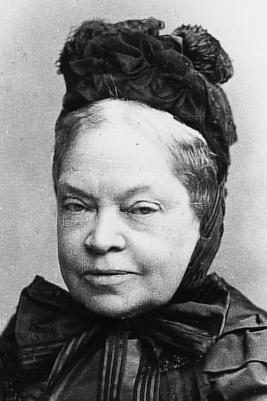
The photo is of Marie von Ebner-Eschenbach. Ebner-Eschenbach, a Roman Catholic aristocrat and author, was one of the first women to receive a doctorate from the University of Vienna. She was awarded an honorary doctorate by the faculty of philosophy in 1900. Also of note is the fact that Ebner-Eschenbach and her husband were among the first members of a Viennese organization that was formed in 1891 to combat anti-Semitism. After Ebner-Eschenbach's death, Lou Andreas-Salomé described her to Freud as "a prototype of motherliness ... the lovelier the older she grew: I was every time newly astonished at how simply and naturally she grew on -- into death itself as into a final breath of life."

I wonder if such talk of motherly love rubbed Freud the wrong way and connected with his tendency to betray men who showed him patrician benevolence. Here's an examination of such a case, in which the older victim of Freud's betrayal was Josef Breuer, a friend of Ebner-Eschenbach's (she was one of Breuer's patients and the two had an extensive correspondence). Before the betrayal, Breuer had helped Freud immeasurably (partly by giving him money). Famously, Breuer gave Freud the story of Anna O., one of Breuer's patients.

Anna O. was Bertha Pappenheim, an Austrian feminist in the first third of the 20th-Century. Whatever one thinks of Breuer's and Freud's methods, they were better than those of the sanatorium in which "electric eels were applied to [Pappenheim's] face, currents of electricity were shot through her body, and she was treated with arsenic." It was in connection with Breuer's treatment that Pappenheim wrote fairy tales, which have now been translated into English.

One can only imagine the courage that it must have taken to be a feminist in Austria-Hungary, a militaristic society that, with a little more organization, would have been truly fascistic. Yet this same culture produced another heroic Bertha, the author Bertha von Suttner, who, though she hailed from a line of field marshals and cavalry captains, combined her feminism with determined pacifism, for which she was awarded the 1905 Nobel Peace Prize. It was Bertha von Suttner's husband, Baron Arthur Gundaccar von Suttner, who co-founded the above-mentioned Viennese society against anti-Semitism.

Another important early Austrian feminist was Rosa Mayreder, an essayist and activist whose critique of sexism led her to engage with the ideas of Nietzsche (pdf), Salomé's old boyfriend and a sexist whose misogyny was outdone probably only by that of the Viennese philosopher Otto Weininger.

The depth of sexism in Austria is evident from its tardiness in admitting women to the hallowed halls of academe. The first woman to get a doctorate from the University of Vienna was Gabriele Possanner von Ehrenthal, who received a doctorate from the faculty of medicine in 1897 (though all her coursework was completed in Zurich since the University of Vienna's medical faculty didn't admit female students until 1900). In 1901, Elise Richter earned a doctorate in philosophy from the University of Vienna. She later (1905) became the first woman to pass her habilitation from that school. She later perished in Theresienstadt (1943). It wasn't until 1930 that a woman passed the habilitation in the University's medical faculty.

Despite the opposition, these early feminists' efforts bore fruit. This is attested especially by the success of Austrian women in math and the physical sciences between the world wars. There is, for example, Lise Meitner, Olga Taussky-Todd, Hilda Geiringer von Mises, Herta Taussig Freitag, Cecilia Krieger, Marietta Blau, and Hertha Wambacher. In psychology, there was Else Frenkel Brunswik, who studied in Vienna with Karl Bühler.

And, of course, psychoanalysis attracted many Austrian women of a scientific/medical inclination between the wars, such as Helene Deutsch, Edith Buxbaum, Margaret S. Mahler and Anna Freud.

Saturday, August 30, 2008

Schwarzspanierstrasse 15

On the site of this building stood the house where Beethoven died in 1827. Beethoven had many residences in Vienna. Otto Weininger, a very odd philosopher admired by Karl Kraus, Ludwig Wittgenstein, James Joyce, etc. -- took his own life in this apartment building in 1903.

Weininger hung out with some of the writers from Cafe Griensteidl, but his basic ideas seem largely unconnected to his Viennese contemporaries. His ideas have precursors in Kant and Schelling.